Maintaining clean, moss-free cracks between pavers and patio stones requires purpose-built tools. The right crack weeder can reach tight gaps, remove deep-rooted weeds, and minimize surface damage. The following five products are selected for their design, durability, and practical performance across driveways, sidewalks, and patios. Each option emphasizes leverage, comfort, and effective scraping, helping you restore neat lines between stones without excessive bending or guesswork.
| Product | Brand | Key Benefit |
|---|---|---|
| BARAYSTUS Crack Weeder Long Handle 3-in-1 | BARAYSTUS | 3-in-1 cleaning power with adjustable length |
| BARAYSTUS Crack Weeder, Stainless Steel | BARAYSTUS | L-shaped precision for tight gaps |
| WORKPRO Crack Weeder, 12.5″ | WORKPRO | Ergonomic soft handle and versatile edge |
| Lilyvane Crack Weeder, 29″ | Lilyvane | Long reach with a durable manganese blade |
| Manganese Steel Crack Weeder Tool (TrigenTeels) | TrigenTeels | Dual-edge blade with serrated and triangle options |
BARAYSTUS Crack Weeder Long Handle 3-in-1

The BARAYSTUS 3-in-1 weeding tool combines a curved scraper for narrow crevices, a triangular scraper for wider gaps, and a durable metal wire weed brush. Its 0.08″ thick stainless steel blade resists corrosion while delivering precise moss and weed removal without scratching pavers, bricks, or tiles. The handle adjusts to 30.7, 44.5, or 58.6 inches, enabling upright use to reduce back strain or a shorter reach for more control. The ergonomic grip helps minimize fatigue during extended sessions.
BARAYSTUS Crack Weeder, Stainless Steel Manual Crevice Weeding Tool

This L-shaped crevice weeder leverages multiple sharp blades that pierce and pull weeds from narrow gaps, including stubborn moss. The high-carbon steel with anti-rust coating resists wear and deformation, maintaining cutting precision through repeated use in moist garden beds and concrete cracks. The design supports pushing, pulling, and digging actions to tackle varied weed species while preserving the integrity of surrounding joints and mortar.
WORKPRO Crack Weeder, 12.5″ Stainless Steel
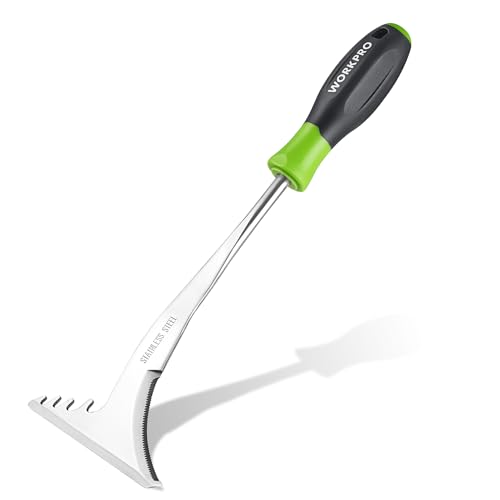
WORKPRO’s 12.5″ crack weeder features an L-shaped blade designed to cut through turf and root systems from multiple angles. A cutting edge and sawtooth section helps clean cracks and edge lawns along pavers. Built from high-hardness polished stainless steel, this tool resists rust and bending. The soft, non-slip handle enhances control, and a hanging hole provides easy storage to keep a tidy shed or garage.
Lilyvane Crack Weeder, 29″ Long

This long-handled tool uses a manganese steel blade for durability and resisting bending in hard-use environments. The L-shaped design supports multiple actions—pushing, pulling, digging, and cutting—making it a versatile option for cracking wide gaps and removing weeds from sidewalks, driveways, and decks. The blade’s sharpened edges offer controlled, precise weed removal with minimal damage to surrounding joints.
Manganese Steel Crack Weeder Tool (TrigenTeels)

TrigenTeels presents an upgraded L-shape weeding tool with a dual-edge, serrated inner edge and sharp outer edge. The serrated inner edge functions like a saw to sever thick roots, while the outer edge cleanly slices through surface weeds. A built-in triangle awl on the back targets wider cracks and deeper crevices, enabling more thorough removal with fewer passes. A robust design aims to withstand frequent outdoor use, even in moist substrates.
Buying Guide: Key Purchase Considerations
- Weeding reach and leverage: Longer handles reduce back strain when kneeling is impractical. Look for adjustable or long handles to suit different user heights and workloads.
- Blade design and durability: L-shaped blades, serrated edges, and interchangeable heads offer flexibility. Stainless steel and manganese steel provide better rust resistance and longer lifespans in wet environments.
- Crack accessibility: Narrow gaps require curved or pointed scraping elements. Tools with multiple scrape heads handle both tight crevices and wider joints.
- Versatility vs. specialization: Some tools combine brushes with scrapers for moss, dirt, and root removal; others focus on crevices alone. Choose based on your typical crack width and weed species.
- Grip comfort and fatigue: Ergonomic handles, soft grips, and balanced weight help reduce hand and wrist fatigue during extended sessions.
- Durability and maintenance: Anti-rust coatings and replaceable parts extend tool life. Consider tools with replaceable brush heads or blades for ongoing use.
- Storage and organization: Tools with hanging holes or compact designs stay organized in sheds or garages, reducing clutter and improving accessibility.
- Cost versus value: Higher-quality materials often yield longer service life, implying lower long-term costs even if the upfront price is higher.
Across these options, users should balance reach, precision, and comfort. For frequent, heavy-duty maintenance of wide crack networks, a multi-head or adjustable-length tool can reduce effort. For tight crevices between dense pavers, a dedicated L-shaped or curved scraper with a sharp blade may be essential. The best choice depends on your typical crack widths, weed species, and how often you perform cleaning tasks.
Additional Considerations for Pavers and Patios
- Surface safety: Prefer tools that minimize surface scratching on stone, brick, or concrete while effectively removing moss and weeds.
- Weather resilience: Outdoor tools should resist moisture and temperature fluctuations. Stainless and manganese steels perform well under rain and irrigation exposure.
- Maintenance habits: Clean blades after use to prevent rust and keep the edges sharp. Dry storage helps preserve coating and extend tool life.
- End-user requirements: For gardeners with back issues, prioritize adjustable-length handles and ergonomic grips. For casual use, lighter weight designs can suffice.