Indoor gardeners rely on green lighting to monitor and assist plant health without disrupting growth. This guide highlights five green-light focused options that balance safety, efficiency, and practicality. Each product section explains how the light helps plant care, along with key features to consider for home or commercial setups.
Summary of Selected Products
| Product | Brand | Key Benefit |
|---|---|---|
| VIVOSUN 19-Bulb High Intensity LED Green Light Grow Room Headlight | VIVOSUN | Hands-free, bright green beam for in-room checks without disturbing plants |
| MiracleLED 604614 Green Spectrum Stasis Light, 60W | Miracle LED | Low heat, no mercury; sleep-friendly green spectrum |
| SmokePhonics Green Spectrum LED Hydroponic Stasis Night Cycle | Miracle LED | Quiet, low-heat, long-lasting LED spectrum for nocturnal cycles |
| yentbokj Grow Lights for Indoor Plants, 5 Heads | yentbokj | Adjustable tripod, full-spectrum options, timers and remote control |
| VIVOSUN 2 Pack 19 Bulbs High Intensity LED Green Light Headlight | VIVOSUN | Two-head kit for broader coverage and simultaneous checks |
VIVOSUN 19-Bulb Green Light Headlamp For Plants

The VIVOSUN green headlamp provides a hands-free light beam in a vivid green spectrum. This setup lets a caretaker inspect plant leaves and soil without triggering photosensory responses that could disrupt nocturnal plant processes. It offers three brightness levels plus a flash mode, enabling safe adjustments in a pitch-dark room. The broad appeal ranges from professional indoor farms to hobbyists who require precise visibility during routine checks. The green light is designed to minimize disruption while illuminating work areas for pruning, watering, or equipment servicing.
MiracleLED Green Spectrum Stasis Light

This MiracleLED unit emphasizes green-spectrum lighting with minimal heat output. Its design keeps plants safer from heat stress and wilting compared to traditional bulbs. The green spectrum is tailored to avoid disturbance of resting stages in plants, while the LED technology promises longer life—potentially up to 15 times longer than conventional bulbs. It suits growers who prioritize quiet operation and energy efficiency in enclosures or grow rooms where nighttime monitoring occurs.
SmokePhonics Green Spectrum LED Hydroponic Night Cycle

This green-spectrum option emphasizes nocturnal operation with minimal heat and no mercury. The design aims to avoid disturbing sleeping plants while delivering a spectrum compatible with hydroponic systems. Its LED-based longevity helps reduce replacement frequency and total cost of ownership in setups where nighttime light cycles are common. It is suitable for growers seeking a discreet, energy-efficient lighting solution that supports plant maintenance routines after dark.
yentbokj 5-Head Full Spectrum Grow Light
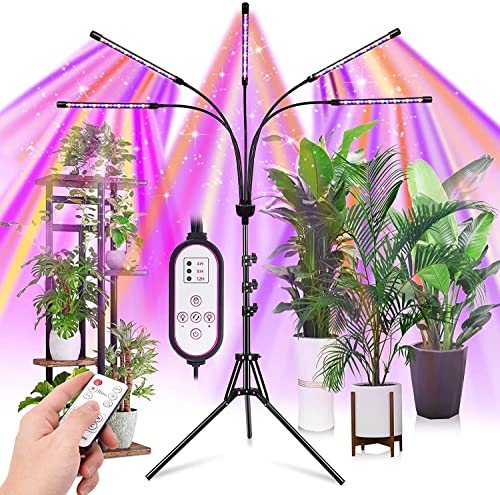
The yentbokj unit features five adjustable LED heads with a tripod stand, offering flexible height and angle control. It supports multiple spectral modes—Red+Blue, White, and White+Red+Blue—so growers can tailor lighting to vegetative growth, flowering, or maintenance stages. Ten dimming levels across each head provide precision control, while inline and RF remotes extend convenience to automated schedules up to 30 meters away. Independent head control enables customized per-plant lighting, useful in mixed-species setups.
VIVOSUN 2 Pack 19 Bulbs LED Green Light Headlamp

This two-pack version offers doubled availability for coverage across larger grow spaces or for simultaneous eye-level checks of multiple plants. Like the single-head version, it provides a green light that minimizes plant disturbance while delivering clear visibility for tasks such as pruning, nutrient assessment, or equipment adjustment in dark rooms. The design focuses on practical utility in home grow rooms and small-scale facilities where flexibility matters.
Note: The above product line emphasizes green-spectrum lighting for plant monitoring and nocturnal maintenance. When evaluating options, consider spectrum specificity, heat output, installation ease, and automation features. Below are purchase considerations to help compare choices across brands and models.
Buying Guide: Key Purchase Considerations For Green Lights For Plants
- Green-spectrum suitability: Green light is often used to monitor leaves without triggering photosynthesis disruption. Confirm that the product emphasizes a spectrum aligned with non-invasive plant checking and nighttime monitoring needs.
- Heat management: LED-based green lights should minimize heat emission to prevent scorch or wilting. Look for low-heat or energy-efficient designs, especially for enclosed grow spaces.
- Adjustability and coverage: For sections with multiple plants, consider multi-head setups, adjustable tripods, or headlamps that can cover different angles and heights. Independence of head control is advantageous in mixed-species environments.
- Automation options: Timers, remote controls, and auto on/off features reduce daily manual operation. RF remote capabilities (supporting tens of meters) add practical convenience for larger rooms.
- Durability and integration: Look for sturdy mounts (clip-on, clamp, or tripod), reliable power supplies, and long LED lifespans. Mercury-free and low-maintenance designs are preferred for sustainability.
- Safety and application context: Some products emphasize “no heat” or “stasis” cycles to avoid stressing plants during delicate growth phases. Ensure compatibility with your specific plant types and growth stage requirements.
- Cost of ownership: While prices aren’t published here, compare initial costs, replacement frequency, and energy consumption. Long-lasting LEDs reduce long-term expenses even if upfront costs are higher.
Several factors influence which green light setup best fits a given operation. For beginners, a single-head or compact multi-head arrangement with built-in timers can simplify daily routines. For more advanced growers, a flexible system with adjustable spectral modes and remote control capabilities may better support a diverse collection of plants and growth stages. Always verify device compatibility with your growing environment and ensure safe usage in closed spaces where lights operate for extended periods.