Choosing the right weed killer for warm-season grasses like St. Augustine and Bermuda requires attention to turf safety and weed spectrum. The following products are commonly used by homeowners to control broadleaf weeds, sedges, and grassy invaders without harming preferred grasses when used as directed. This guide highlights five options with practical notes on application and compatibility with St. Augustine and Bermuda turf.
| Product | Brand | Key Benefit |
|---|---|---|
| Southern Ag Atrazine St. Augustine Weed Killer | Southern Ag | Targets weeds in St. Augustine and centipede grasses; quart coverage around 3,720 sq ft |
| Spectracide Weed & Feed 20-0-0 | Spectracide | Kills major broadleaf weeds while feeding the lawn |
| Ortho Nutsedge Killer for Lawns Ready-to-Spray | Ortho | Controls sedges, dollarweed, dandelion and other listed weeds |
| Liquid Harvest Mesotrione (Compare to Tenacity) | Liquid Harvest | Broadleaf and grass weed control; suitable for multiple warm-season grasses |
| PBI-Gordon Aethon Herbicide SL | PBI / Gordon | Southern-focused weed control; rosette immunity and long-lasting效果 |
Note: Always follow label directions for timing, coverage, and safety. Some products are safer for certain warm-season grasses than others, and mixing or rotating products may improve results while protecting your lawn’s health.
Atrazine St. Augustine Weed Killer (Southern Ag)

The Southern Ag Atrazine St. Augustine Weed Killer is designed for treated coverage of approximately 3,720 square feet per quart. It is formulated to control weeds in St. Augustine and centipede grasses. The product’s packaging lists basic details such as package weight and application scope, with emphasis on compatibility with St. Augustine lawns. When applying, ensure the lawn is properly irrigated after treatment as directed on the label. Use caution in sandy or stressed soils and observe any re-entry intervals to protect seasonal play or activity areas.
Spectracide Weed & Feed 20-0-0

Spectracide Weed & Feed 20-0-0 combines weed control with lawn feeding. The product’s dual-action formula targets major broadleaf weeds—such as dandelion, chickweed, clover, and plantain—while delivering nitrogen to the turf to support growth and health. This can be convenient for homeowners seeking both weed suppression and lawn nutrition in a single application. Always verify compatibility with St. Augustine or Bermuda grasses on the label and avoid application on stressed or drought-weary lawns to minimize risk of injury.
Ortho Nutsedge Killer for Lawns Ready-to-Spray
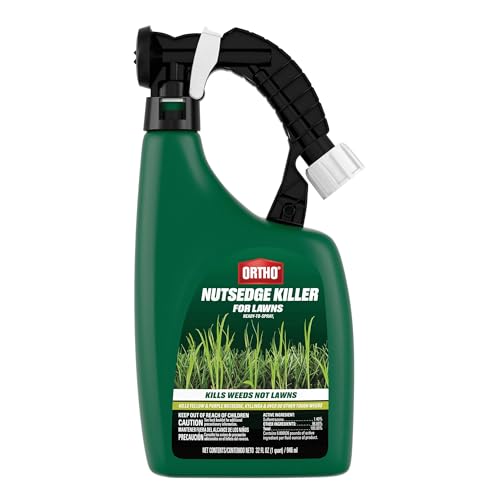
This ready-to-spray weed killer focuses on sedges and listed broadleaf and grassy weeds. It’s designed for use on well-established cool- and warm-season turf grasses, with specific guidance on the types of weeds it controls, including dandelion, purslane, spurge, and other common lawn invaders. For St. Augustine and Bermuda, confirm label permissions and consider spot treatments for sensitive areas to reduce potential turf stress. Ensure thorough coverage and follow irrigation recommendations after application.
Liquid Harvest Mesotrione (8 oz)

Mesotrione concentrates offer broad-spectrum activity against many broadleaf weeds and some grassy weeds. It is labeled for use on several warm-season grasses and is particularly noted for compatibility with St. Augustine and Bermuda when applied as directed. The product is described as fast-acting with visible weed death potentially within 2–3 weeks, and activation relies on adequate rainfall or supplemental irrigation if rainfall is limited. It’s important to avoid applying on stressed or newly established turf and to follow label timing windows for best results.
PBI-Gordon Aethon Herbicide SL

Aethon Herbicide SL is designed for warm-season lawns, including established Bermudagrass, Zoysiagrass, Centipedegrass, and robust St. Augustine varieties like Floratam. The product uses a liquid formulation geared toward suppressing a broad range of broadleaf and sedge weeds, with an emphasis on reducing regrowth from underground tubers and rhizomes. University trials cited in product literature note long-lasting performance, typically extending weeks to months, depending on weed pressure and environmental conditions. Follow label directions for application timing and safety precautions.
Buying Guide
Key considerations when selecting a weed killer for St. Augustine and Bermuda lawns include weed type, turf safety, application method, and environmental impact. Here are practical factors and comparisons to guide decisions:
- Weed spectrum: Identify primary pests (nutsedge, dandelion, clover, chickweed, dollarweed). Some products target sedges specifically (Nutsedge killers), while others provide broadleaf control or pre/post-emergent action.
- Turf compatibility: Warm-season grasses have unique sensitivities. Always check the label for St. Augustine, Bermuda, Zoysia, Centipede, and Floratam compatibility. Avoid products not labeled for your grass type.
- Active ingredient and mode of action: Atrazine-based products often provide broad control but may have environmental restrictions in some regions. Mesotrione-based products offer selective control with a different action mechanism and may be safer for certain grasses when used correctly.
- Application method: Hose-end sprays, ready-to-use formulas, and concentrated mixes each have pros and cons. Consider ease of use, coverage area, and required mixing or equipment (sprayers, spreaders).
- Timing and seasonality: Post-emergent control is common, with some products offering pre-emergent or post-emergent options. Follow seasonal timing to maximize efficacy and minimize stress on turf.
- Irrigation and re-entry: After application, many herbicides require irrigation or a waiting period before re-entry. Adhere to label instructions to protect people, pets, and lawn health.
- Environmental impact and regulations: Some active ingredients may have regional restrictions. Check local guidelines regarding herbicide use in residential lawns and near water sources.
- Rotations and slotting: For persistent weeds or herbicide resistance concerns, consider rotating products with different modes of action to maintain effectiveness over seasons.
- Safety and storage: Keep products out of reach of children and pets. Store in original containers and follow label storage instructions for potency and safety.
In practice, a combination approach—using a targeted sedge killer for nutsedge issues, paired with a broadleaf weed killer or a weed-and-feed product when lawn nutrition is also needed—can provide comprehensive control while preserving St. Augustine and Bermuda turf health. Always perform a small test patch on a discreet area before widespread treatment and consult the product label for any compatibility notes with your specific turf variety.