Maintaining lakefront access often means managing underwater vegetation that can hamper swimming, boating, and shoreline enjoyment. The following selections spotlight trusted lake weed cutters designed to reach bottom weeds, cut with sharp blades, and minimize disturbance to the ecosystem. Each option balances cutting width, throw distance, and durability to suit ponds, lakes, and shorelines.
| Product | Brand | Cut Width | Weight | Rope Length |
|---|---|---|---|---|
| Jenlis The Original Weed Razer | Weed Razer | 48 in | 8 lb | 25 ft |
| Jenlis Weed Razer Express | Weed Razer | 30 in | 6 lb | 25 ft |
| Zynthrafor Adjustable Lake Weed Cutter | Zynthrafor | 37 / 25 / 12 in (three widths) | N/A | 30 ft |
| Jenlis Weed Razer Pro | Weed Razer | 30–62 in | 9 lb | 25 ft |
| VEVOR Lake Weed Cutter (37 in max) | VEVOR | 37 in | Varies | 30 ft |
Jenlis The Original Weed Razer

The Original Weed Razer uses V-shaped razor blades designed to shear aquatic vegetation quickly. It creates a 48-inch-wide cutting path to clear submerged weeds and algae efficiently. Weighing about eight pounds, it sinks to the pond bottom after casting and reaches weeds at their base. A five-foot handle supports effective control from shore, dock, or boat, helping keep shorelines accessible for water activities.
Jenlis Weed Razer Express
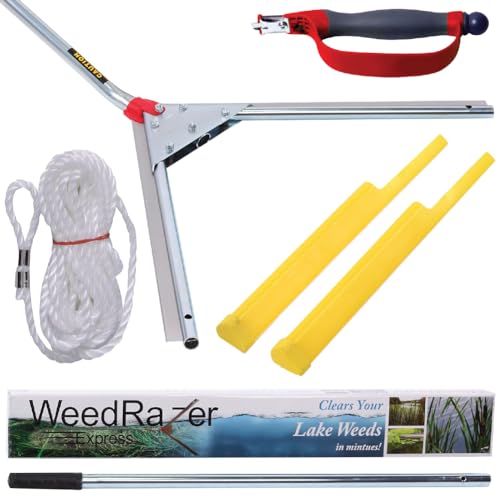
Express is a compact, easy-to-use lake weed cutter that delivers a 30-inch-wide cut with sharp V-shaped blades. It weighs roughly six pounds and includes a five-foot handle to sink and cut weeds at the base. Ideal for smaller or mid-size lakefront areas, it helps maintain shoreline access for swimming and boating.
Zynthrafor Adjustable Lake Weed Cutter
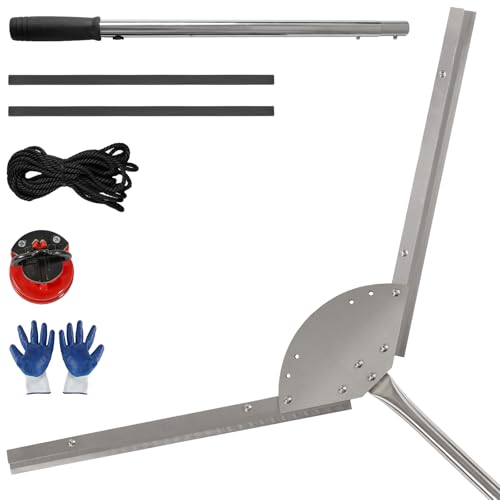
This cutter offers three cutting widths (37, 25, and 12 inches) with adjustable blade settings for varied weed densities. Its stainless steel construction provides corrosion resistance, and the blade is designed to reach the roots of submerged plants to reduce regrowth. A 30-foot rope enables extended reach across larger water bodies, with robust blades and a blade sharpener included for ongoing maintenance.
Jenlis Weed Razer Pro

The Pro version expands the reach with an adjustable 30 to 62-inch cut width, allowing coverage of larger weed patches from shore or boat. It arrives fully assembled with a blade sharpener and weighs about nine pounds. A five-and-a-half-foot handle supports deeper cuts near the waterline while preserving shoreline access for water activities.
VEVOR Lake Weed Cutter (48 in Max)

VEVOR’s lake weed cutter features adjustable widths for cutting up to 48 inches and includes a 30-foot throw rope. Built with stainless steel blades and tool steel components, the tool emphasizes durability and corrosion resistance for long-term outdoor use. It’s designed to reach pond bottoms and sever weed roots with efficiency while preserving nearby aquatic life balance.
Buying Guide: Key Purchase Considerations
- Cut width versus lake size: Wider cutting widths speed up clearing large weed patches but may be heavier. Consider your shoreline length, boat access, and docking space.
- Throw rope length and casting ease: Longer ropes extend reach without wading, but require proper handling. Look for 25–30 ft ranges for typical residential lakes.
- Blade design and material: V-shaped blades provide clean cuts and root removal. Steel or stainless steel blades resist corrosion in freshwater; consider models with rust-resistant coatings for longevity.
- Weight and handling: Lighter tools are easier to cast and retrieve but may require more passes. Heavier units can cut deeper but demand more effort.
- Adjustable widths and angles: Some cutters offer multiple widths or angle settings to adapt to weed density and water depth. This flexibility helps in varying seasons and lake conditions.
- Durability and maintenance: Tools built from corrosion-resistant materials with blade sharpeners reduce replacement frequency and keep performance steady over time.
- Environmental impact: Choose tools designed to minimize disturbance to aquatic ecosystems and to avoid spreading invasive species during use and transport.