Effective irrigation starts with accurate soil moisture data. The following five sensors represent a mix of capacitive, digital, and analog options designed to help American gardeners and small-scale farmers optimize watering schedules, conserve water, and promote healthier plant growth. Each item below includes core features to help you compare quickly and decide which model fits your irrigation setup.
| Product | Brand | Key Features |
|---|---|---|
| AEDIKO Upgrade Automatic Irrigation DIY Kit | AEDIKO | Capacitive moisture detection, 1-channel relay, 5V operation, built-in water pump |
| ECOWITT WH51L Soil Moisture Sensor | ECOWITT | LCD display, 1m probe, Wi‑Fi gateway compatible, IP68 probe |
| ECOWITT WH51 Soil Moisture Sensor (Accessory) | ECOWITT | Wireless sensing, gateway compatibility, real-time display on multiple devices |
| HiLetgo LM393 Soil Moisture Detect Sensor | HiLetgo | Dual output, simple digital/analog options, Arduino compatibility |
| XLUX Long Probe Soil Moisture Meter | XLUX | Deep probe, large dial, quick readings |
Choosing the right soil moisture sensor depends on your irrigation method, data needs, and whether you want simple spot checks or a networked system. The products listed here cover a spectrum from standalone meters to DIY kits that integrate pumps and relays, giving you flexible options for both home gardens and larger growing spaces.
AEDIKO Upgrade Automatic Irrigation DIY Kit
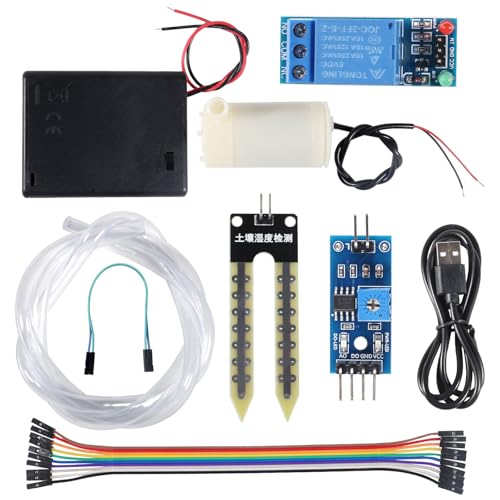
The AEDIKO kit combines a capacitive soil moisture sensor with a miniature water pump and a 5V relay module in one cohesive package. It is designed to water plants automatically based on soil moisture readings, making it suitable for DIY irrigation projects, planters, and small garden beds. The LM393-based soil moisture detector handles 3.3V to 5V operation, and the unit includes a fixed mounting bolt for straightforward installation. The 1-channel relay supports up to AC 250V/10A, enabling reliable control of a pump or valve. This kit is ideal for hands-on users who want an integrated solution.
Key considerations:
– Capacitive sensing reduces corrosion risk compared to resistive probes, which can improve longevity in moist soils.
– The included pump and tubing enable a complete watering loop without separate components.
– Compatibility with 3.3–5V microcontrollers makes it easy to integrate with popular platforms like Arduino and ESP32.
– Installation requires basic wiring and a secure mounting plan to avoid water exposure to electronics.
ECOWITT WH51L Soil Moisture Sensor

The WH51L stands out with an LCD display for real-time moisture readings and a 1-meter PVC cord allowing depth access into soils. Its data can be streamed via Ecowitt gateways and reviewed in the app after configuration. The WH51L version boasts IP68-rated waterproofing on the probe and a deeper sensing range compared to the WH51, making it well-suited for outdoor beds and garden plots. It pairs with Ecowitt gateways like GW1100/GW2000/GW1200 to monitor multiple sensors at once.
Key considerations:
– Real-time visualization on the LCD reduces the need for constant mobile checks.
– Deep probe length improves accuracy in larger pots and deeper soils.
– Ecosystem integration through gateways and Ecowitt app supports scalable irrigation management.
– Wireless data can be uploaded to Ecowitt weather servers for long-term history and alerts.
ECOWITT WH51 Soil Moisture Sensor (Accessory)

This accessory version highlights its wireless design and compatibility with a GW1000/GW1100 gateway to stream live data. It supports integration with Ecowitt weather stations or consoles, enabling multi-sensor layouts. While the sensor is designed to be used with gateways for remote monitoring, it can also be used to supplement an existing network in larger yards or greenhouses. Ideal for consistent irrigation strategies across several zones.
Key considerations:
– Designed for expansion within Ecowitt ecosystems.
– Real-time monitoring across multiple sensors improves irrigation zoning.
– Cloud and app integration enable remote management and alerts.
– Compatibility with different consoles increases flexibility for various setups.
HiLetgo LM393 Soil Moisture Detect Sensor
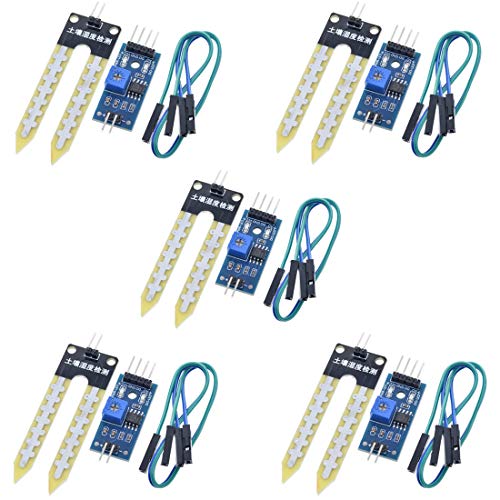
The HiLetgo LM393 sensor is a simple, cost-effective option for basic irrigation automation. It uses an LM393 comparator, with a digital output indicating soil dryness and an analog option for more nuanced readings. The module supports 3.3V–5V operation, making it compatible with most Arduino boards and microcontrollers. It’s well-suited for simple DIY watering projects or as a sensor node in a small irrigation system. The dual-output design provides flexibility for different control schemes.
Key considerations:
– Good starting point for beginners and hobbyists.
– Digital output gives clear dry/wet signals; analog output enables finer moisture thresholds.
– Compact form factor simplifies mounting in planters or garden beds.
– May require calibration for different soil types and irrigation goals.
XLUX Long Probe Deep Use Soil Moisture Meter

The XLUX meter features a long 5.5-inch probe to reach deeper soil layers, making it suitable for larger pots, raised beds, and outdoor gardens. The large dial with ten scales across three moisture zones is designed for quick interpretation, helping you decide when to water. The instrument is simple to use and provides immediate feedback once inserted into soil. It’s particularly popular for steady, hands-on monitoring of soil conditions without requiring electronics or connectivity.
Key considerations:
– Deep-probe design informs moisture status beyond the topsoil, improving irrigation decisions for larger containers and garden beds.
– Large, easy-to-read dial speeds up assessment.
– No calibration needed for typical home gardens, though periodic checks against plant signs are advisable.
– Best for users who prefer a low-tech, reliable handheld solution.
Buying Guide: Key Purchase Considerations
- Measurement type: Capacitive sensors reduce corrosion and often last longer in moist soils, while resistive sensors may be cheaper but wear faster in damp conditions.
- Data access: Do you want local readouts (LCD), app integration, or gateway-based cloud access? Choose based on whether you need in-the-field readings or remote monitoring across zones.
- Depth of sensing: Deep-probe meters or accessories are preferable for larger pots and raised beds, whereas shallow probes work well for container gardening and small planters.
- Automation compatibility: For DIY irrigation, select sensors that integrate with relays, pumps, or controllers you already use (Arduino, Raspberry Pi, or dedicated irrigation hubs).
- Expansion potential: If you plan to scale up, consider ecosystems that support multiple sensors, gateways, and dashboards, such as Ecowitt gateways or cloud-based apps.
- Durability and climate: Outdoor and greenhouse installations benefit from IP-rated probes and weather-resistant housings to withstand sun, rain, and temperature changes.
- Maintenance: Look for sensors with replaceable probes or components and consider calibration needs for accurate long-term readings.
Across the selections, users gain flexibility from different configurations: integrated DIY kits with pumping capabilities, standalone moisture meters for quick checks, and networked sensors for wide-area irrigation management. By aligning sensor capabilities with your irrigation goals—whether simple plant care or automated watering across multiple zones—you can optimize water use, protect plant health, and achieve consistent results in varied American climates.