For pond owners, sinking fish foods are essential, especially for bottom-feeding species like koi and many goldfish varieties. This guide highlights headlining sinking pellets and how they support digestion, water quality, and overall health across seasons. The selections below cover a range of pond sizes, feeding styles, and temperature conditions to help you choose a reliable, nutritionally balanced option for your aquatic inhabitants. Use the brief comparison table to scan key details at a glance, then read deeper into each product’s benefits and feeding guidance.
| Product | Brand | Size | |
|---|---|---|---|
| MICROBE-LIFT Sinking Fish Food Pellets (14 oz) | MICROBE-LIFT | 14 oz | New fish acceptance and bottom-feeding support |
| MICROBE-LIFT Sinking Pellets (5.75 lbs) | MICROBE-LIFT | 5.75 lbs | Balanced meals for new and established pond fish |
| TetraPond Spring And Fall Diet (7 L) | Tetra | 7 L | Cool-weather nutrition and digestibility |
| Hikari Wheat Germ Sinking (11 Lb, Medium Pellet) | Hikari | 11 Lb | Wheat germ-based, highly digestible |
| Kenzen Koi Food Primary Sinking Diet (10 lb) | Kenzen | 10 lb | Year-round sinking diet, protein and fat balance |
MICROBE-LIFT Sinking Fish Food Pellets (14 oz)

The 14-ounce Microbe-Lift sinking pellets are designed to deliver balanced nutrition to newly added pond fish, facilitating adaptation to new surroundings. The sinking format makes them suitable for bottom-feeders and stressed or sick fish that naturally feed away from the surface. They are positioned as appropriate for warmer seasons like late spring and summer when fish are most active. Feeding is simple: add the pellets to the water three times per week, following container directions.
MICROBE-LIFT Sinking Pellets (5.75 lbs)

This bulk option provides the same sinking pellet formulation tailored for pond fish adjusting to their environment. It emphasizes suitability for new arrivals and stressed individuals that feed from the bottom. The product is designed to be fed three times per week, making it convenient for weekly maintenance regimes and larger ponds that require more feed without frequent restocking.
TetraPond Spring And Fall Diet (7 L)

The TetraPond Spring And Fall Diet is designed as a transitional formula suitable for koi, goldfish, and other outdoor pond species during changing seasons. It is formulated with wheat germ to provide digestible protein even when water temperatures dip. The soft sinking sticks are easy for fish to consume, supporting consistent feeding during cooler periods when metabolism slows.
MICROBE-LIFT Sinking Fish Food Pellets (40 lbs)

This large-format option mirrors the 14-ounce formula but is sized for substantial pond populations or larger installations. It maintains the same emphasis on bottom-feeding and stress resilience, enabling convenient bulk servicing for routine feeding schedules. Feeding recommendations suggest adding the pellets three times per week to support steady growth and health in a range of water temperatures.
Kenzen Koi Food Primary Sinking Diet (10 lb)
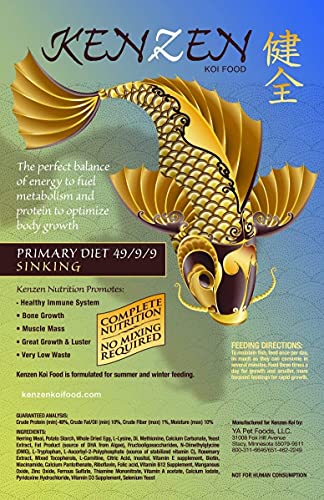
The Kenzen Koi Food Primary Sinking Diet is tailored for year-round feeding with a 7mm pellet size. It provides at least 49% crude protein and 9% crude fat, aiming to support growth, energy, and immune health. The sinking format makes it suitable for koi that feed off the bottom, and the formula is designed to be balanced for varying water temperatures and seasonal activity.
Buying Guide
Key considerations when selecting sinking fish food for ponds include fish type, pond size, water temperature, and feeding behavior. Below are the main angles to evaluate:
- Target species and size: Goldfish, koi, and other pond dwellers vary in dietary needs. Larger fish often benefit from higher protein content and larger pellet sizes, while smaller fish may prefer finer pellets.
- Temperature and seasonality: In cooler months, look for wheat germ or low-temperature formulations to maintain digestibility. Sinking pellets are typically favored for bottom-feeders year-round, but temperature-tuned options can reduce digestive stress.
- Pellet size and sinking rate: Pellet diameter and how quickly they sink influence feeding efficiency and waste production. Medium to small pellets suit smaller fish, while larger fish may require bigger pellets.
- Digestibility and ingredients: Digestible proteins and balanced fats support growth without excessive waste, which helps maintain water quality. Wheat germ is often cited for early-season digestibility.
- Feeding guidelines: Consistency matters. Most products recommend feeding three times per week or as directed on the container. Avoid overfeeding to minimize sediment buildup.
- Bulk vs. specialty formulas: Large ponds or high-population setups benefit from bulk products, while smaller ponds may be well-served by specialty or season-specific formulas.
Performance perspectives vary by climate and pond goals. Growth-oriented feeds may boost koi vitality but could increase waste if not matched with filtration and aeration. In cooler climates, transitioning between spring, summer, and fall diets can optimize digestion and appetite. Consider testing different products for several weeks to observe feeding acceptance, growth indicators, and water quality. Always adhere to feeding instructions and adjust quantities based on fish activity and observed appetite.