Humic acids are a natural soil conditioner that can improve nutrient availability, soil structure, and microbial activity. This guide highlights five top humic acid products for garden use, explaining how each supports different soil types and plant goals. The focus is on evidence-based benefits, OMRI listings where applicable, and practical application tips for American gardeners seeking healthier soil and stronger growth.
Summary of chosen products:
| Product | Brand | Volume | Key Benefit |
|---|---|---|---|
| Down To Earth All Natural Fertilizers Organic Granular Humic Acids | Down To Earth All Natural Fertilizers | 5 lb | OMRI-listed, increases micronutrient uptake |
| Humic Acids – Humic Acid Fertilizer & Conditioner | PowerGrow Systems | 5 lb | Boosts nutrient uptake and soil microbial activity |
| Farmer’s Secret Soil Revitalizer | Farmer’s Secret | 32 oz | Activated humics, boosts microbial activity, OMRI-listed |
| GS Plant Foods Humic Acid Soil Amendment – 1 Gallon | GS Plant Foods | 1 Gal | Leonardite-based, improves structure and cation exchange |
| Organic Liquid Humic Soil Health Formula by Bloom City | Bloom City | 8 oz | Concentrated, supports nutrient uptake and root strength |
Down To Earth Humic Acids For Organic Gardens

Down To Earth’s granular humic acids arrive as a five-pound box labeled for organic production by OMRI. The product is derived from decomposed organic plant materials and is designed to enhance a plant’s ability to take up micronutrients from the soil. It is suitable for fields, turf, and vegetable gardens. The granules offer a gradual release that can complement regular fertilization, improving soil texture and porosity over time.
Users typically mix granular humic acids into the topsoil or compost pile to increase carbon content, improve water retention, and support microbial habitats. The listed features stress that this amendment is a concentrated source optimized for soil health, not a sole feeding program. For best results, apply per seasonal needs and re-apply as part of a broader soil-building plan.
Humic Acids Fertilizer & Conditioner

This 5-pound bag from PowerGrow Systems emphasizes nutrient uptake and soil microbial activity. Humic acids can help release nutrients bound in soil minerals, increasing their availability to roots. The product also claims to improve overall soil health and support germination. It is suitable for various plant types and can be used as a soil conditioner in gardens, lawns, and container crops. As with other humic products, results depend on current soil conditions and regular application as part of an ongoing soil management plan.
Farmer’s Secret Soil Revitalizer

Farmer’s Secret emphasizes microbial activity in soil as the primary driver of plant success. The 32-ounce bottle uses activated humic acids derived from organic sources and OMRI certification. The product is positioned as a soil health booster rather than a direct plant fertilizer. Application is recommended monthly through the growing season, with heightened use in fall and spring. It aligns with sustainable gardening practices by focusing on soil life to improve nutrient cycling and plant resilience.
GS Plant Foods Humic Acid – Leonardite Liquid

GS Plant Foods offers a Leonardite-derived humic acid concentrate designed to improve soil structure and nutrient availability. The product is OMRI-listed for organic use, making it suitable for certified organic programs and regenerative soil practices. Leonardite provides a rich source of organic matter that can help increase cation exchange capacity and support root-zone nutrient access. The 1-gallon size is convenient for larger garden spaces and regular amendment routines.
GS Plant Foods Humic Acid 32 Oz

This 32-ounce GS Plant Foods option mirrors the Leonardite-derived formula with the same OMRI listing and core benefits. It emphasizes improving soil structure and nutrient access, helping plant roots reach existing soil nutrients more efficiently. The product is designed for versatile use in home gardens, lawns, and landscaping projects that require enhanced soil conditioning over time. Regular topdressing or watering-in can help sustain soil health gains.
Bloom City Organic Liquid Humic Soil Health Formula
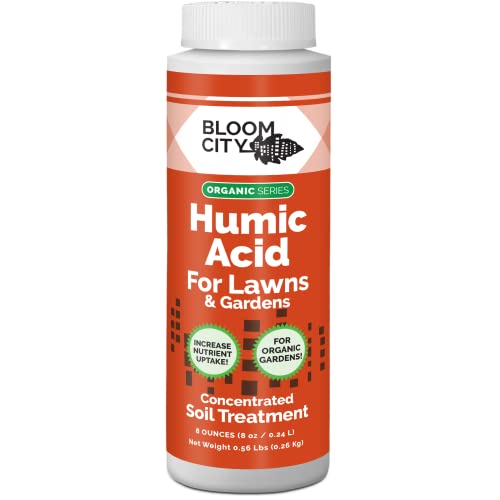
Bloom City’s organic liquid humic formula is marketed for lawns, gardens, and houseplants. The concentrate makes 30+ gallons when diluted, offering a cost-effective option for larger spaces. The product aims to support nutrient uptake, root strength, and overall soil efficiency. Its residential focus makes it accessible for homeowners seeking an easy-to-apply solution, though outcomes depend on existing soil chemistry and watering practices.
Buying Guide: Key Considerations And Comparisons
Humic acids vary in source, concentration, and packaging. When choosing a product, consider soil type, crop goals, and OMRI status. Granular products tend to offer slower, longer-lasting effects suitable for ongoing soil conditioning, while liquid formulas can deliver faster nutrient mobilization and rapid soil response. For organic or certified organic programs, OMRI listings provide assurance that the product meets organic standards.
- Source material: Leonardite-based humic acids typically provide consistent results and high-quality organic matter, supporting cation exchange and nutrient availability.
- Form and application: Granular blends suit long-term soil conditioning; liquids are useful for quick soil reactions and mixes with irrigation systems.
- Organic certification: Look for OMRI listings if organic production is a priority.
- Soil health focus: Some products emphasize microbial activity and soil biology, which can improve resilience and nutrient cycling over time.
- Household and landscaping use: For lawns and home gardens, consider dilution rates, coverage per gallon, and compatibility with existing fertilizer programs.
- Frequency: Many products recommend monthly applications or seasonal boosts, especially during fall and spring transitions.
- Cost efficiency: Concentrated liquids may offer more economical coverage per gallon; granular forms last longer per bag but require manual spreading.
In practice, gardeners may combine humic acids with compost, organic mulch, and proper soil testing to tailor amendments to specific soil deficiencies. For soil with low organic matter or poor structure, a phased approach beginning with soil testing, followed by gradual humic acid applications, tends to yield the most reliable improvements in water retention, nutrient availability, and root development.