Choosing the right geotextile fabric is essential for effective French drains, helping with filtration, separation, and drainage under various surfaces. The following highlighted products are designed to stand up to heavy use, varying soil conditions, and long-term outdoor exposure. This guide presents practical options, comparing strength, permeability, and installation ease to help American homeowners and contractors select the best fabric for their drainage projects.
| Product | Width x Length | Weight | Key Benefit |
|---|---|---|---|
| VEVOR Geotextile Landscape – 4ft x 100ft | 4 ft x 100 ft | 8 oz | Strong, durable, erosion-resistant with good permeability |
| Fysatrix Geotextile – 6 oz, 4 ft x 50 ft | 4 ft x 50 ft | 6 oz | Heavy-duty, customizable sizes, durable underload |
| Super Geotextile – 4 oz, 4×100 | 4 ft x 100 ft | 4 oz | Light-medium duty, easy to install, UV resistant |
| PioneerWorks Geotextile – 4×50 and 6 oz | Various (4×50, 4×100) | 6 oz | Heavy-duty construction-ready, high load tolerance |
| PioneerWorks Geotextile – 4×100, 6 oz | 4 ft x 100 ft | 6 oz | High strength, suitable for driveways and erosion control |
VEVOR Geotextile Landscape, 4ft x 100ft

VEVOR’s 8-ounce non-woven geotextile fabric is designed for robust drainage projects. The 350N tensile strength offers resilience against tearing under heavy loads, making it well-suited for French drains, ground cover, and erosion control. Permeability is engineered to balance filtration and water flow, supporting gravel filtration while allowing adequate drainage and airflow to the soil beneath. The material is described as easy to cut and install, which helps speed up project timelines and reduce waste on larger installations.
Fysatrix Geotextile – 6 oz, 4×50 ft
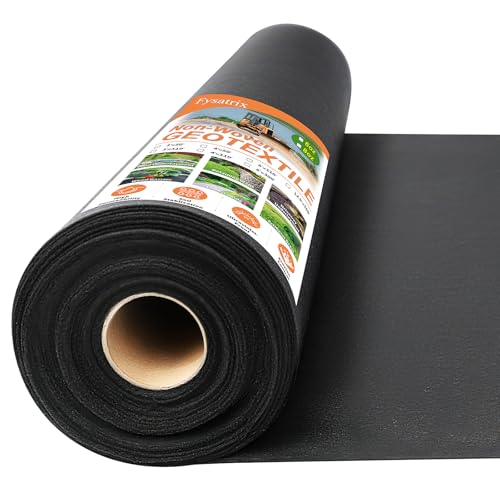
This 6-ounce non-woven fabric from Fysatrix targets heavy-duty drainage and erosion control. Its strength supports filtration and separation for French drains with high traffic or challenging soil profiles. The product promotes precise installation through customizable sizing, which minimizes waste and ensures a tighter fit along trench lines and around drainage components. The material is designed to resist sun exposure and decay, helping maintain its shape and performance over time.
Super Geotextile – 4 oz, 4×100

Super Geotextile offers a 4-ounce non-woven fabric ideal for mid-range drainage projects and landscaping. It emphasizes easy installation across multiple sizes and configurations, helping reduce scrap and material waste. The fabric is described as UV-resistant and durable, with a stability that supports long-term drainage and erosion control in garden beds, paths, and light-duty drive areas. This option is often chosen for standard French drain runs with moderate soil conditions.
PioneerWorks Geotextile Landscape – 4×50 and 6 oz

PioneerWorks emphasizes heavy-duty performance for erosion control and load-bearing applications. The 6-ounce option offers increased strength and durability, with guidance that this fabric is best used where substantial drainage, filtration, and separation are necessary—such as under concrete walkways, retainer walls, or heavy traffic paths. The product notes its suitability for major construction drainage while still permitting drainage and filtration, making it a strong candidate for robust French drain installations.
PioneerWorks Geotextile Landscape – 4×100, 6 oz

This PioneerWorks option combines a 6-ounce weight with a full 4×100-foot sheet, delivering significant load tolerance and long-term durability. It is described as suitable for driveways, erosion control, and heavy traffic paths, expanding its use beyond basic landscaping to more demanding drainage scenarios. The product’s emphasis on dual-purpose performance—drainage and erosion control—positions it as a versatile choice for French drains integrated into larger outdoor projects.
Buying Guide: Key Purchase Considerations
Geotextile fabrics for French drains must balance several factors to ensure reliable drainage and soil health over time. This buying guide outlines important considerations and how they affect performance.
- Strength and weight: Heavier fabrics (6–8 oz) generally offer greater tear resistance and durability under heavy loads, but may be less permeable. Lighter fabrics (4 oz) often provide higher permeability but can wear more quickly in demanding environments.
- Permeability and filtration: The best geotextile fabrics allow water to pass while preventing soil and gravel from clogging the drain. A fabric’s pore structure and weight influence filtration efficiency and lifespan.
- Durability against environmental factors: UV resistance, rot resistance, and weather exposure affect long-term performance. Non-woven fabrics typically resist degradation well in outdoor settings.
- Cutting and installation: Fabrics that can be easily cut to fit trench shapes reduce waste. Customizable sizes help minimize scrap when building uneven or irregular drains.
- Load-bearing capacity: For drives, walkways, or heavy traffic areas, select fabrics designed for high load tolerance, ensuring stability around the drain and surrounding soils.
- Compatibility with drainage components: Consider how the fabric interacts with gravel, pipe materials, and gravel liners. Some fabrics are explicitly designed to function as liners in gravel-filled channels.
- Warranty and brand reliability: Reputable brands typically provide consistent performance and clearer installation guidance, which is valuable for complex drainage projects.
In practice, for residential French drains, a mid-weight fabric (around 4–6 oz) often offers a balanced mix of permeability and strength. For harsh soils, high traffic areas, or projects with concrete or pavement nearby, a heavier option (6–8 oz) may deliver longer service life and better erosion control. Always verify that the chosen fabric is compatible with your trench dimensions and drainage plan.