When choosing geotextile fabric for drainage, the right fabric blends high strength with superior filtration and soil compatibility. This guide highlights five reliable options designed for French drains, driveways, landscaping, and erosion control. Each product excels in permeability, tear resistance, and ease of installation, making them strong candidates for American projects ranging from home gardens to larger job sites. Explore how these fabrics perform under load, how they manage sediment, and how easy they are to work with in typical backyards and construction settings.
Summary of Selected Products
| Product | Size | Key Strength | Ideal Use |
|---|---|---|---|
| VEVOR Geotextile Landscape | 4 ft x 100 ft | 8 oz, 350N tensile | Ground cover, drainage, French drains |
| PioneerWorks Geotextile Landscape | 4 ft x 100 ft | 6 oz, 350N tensile | Driveway underlayment, erosion control |
| VEVOR 6 ft x 100 ft Non-Woven | 6 ft x 100 ft | 8 oz, 350N tensile | Gravel underlayment, drainage |
| VEVOR Geotextile Landscape | 6 ft x 50 ft | 8 oz, 350N tensile | Ground cover, French drains |
| PioneerWorks Geotextile Landscape | 4 ft x 50 ft | 6 oz, 350N tensile | Drainage, erosion control |
VEVOR Geotextile Landscape 4×100

Strong, durable 8 oz non-woven PP geotextile fabric delivers high tensile strength (350N) and a solid 440 N load capacity. Designed for weed suppression, erosion resistance, and robust drainage, this fabric performs well in garden beds, French drains, and under gravel paths. Its non-woven structure improves filtration while allowing water and air to pass, helping maintain soil health and minimize sediment in drainage systems.
Installation is straightforward: roll out, cut to size, and secure. The material is engineered to resist tearing and damp conditions, reducing maintenance over time. Compared with lighter options, it offers superior durability for longer-lasting drainage solutions with reliable performance in varied soil conditions.
PioneerWorks Geotextile Landscape 4×100

PioneerWorks offers an 8 oz-equivalent performance with 350N tensile strength, optimized for heavy-duty erosion control and drainage support. This fabric is described as a prime choice for major construction erosion control, drainage under concrete slabs, and walk paths. While providing drainage, it prioritizes load-bearing capacity for high-traffic areas and heavy materials, rather than weed suppression alone.
Use cases include French drains, driveway underlayment, and retaining walls. It’s especially suited for projects that require long-term stability and filtration, where soil separation and sediment control are essential to maintain drainage system effectiveness.
VEVOR 6×100 Non-Woven Geotextile 8 oz
This 6 ft by 100 ft geotextile provides durable 8 oz non-woven material with 350N tensile strength and 440 N load capacity. The fabric emphasizes easy installation, with a design that supports gravel filtration, water drainage, and air penetration to preserve soil nutrients. It behaves well as a liner in drainage systems and excels as a weed barrier while maintaining drainage efficiency.
Ideal applications include driveway underlayment, ground cover for garden beds, and drainage corridors. The fabric’s permeability supports filtration and separation in drainage layers, reducing sediment entry and extending the life of the drainage installation.
PioneerWorks Geotextile Landscape 4×50

This PioneerWorks option weighs in with 6 oz and 350N tensile strength, designed for drainage, erosion control, and road stabilization. It emphasizes heavy-load performance for underlayment, retention projects, and French drains, while still providing essential drainage and filtration. It’s a strong choice for projects where concrete, pavement, or retaining features demand additional support and filtration in a single layered system.
Non-woven Geotextile Filter Fabric 82×32
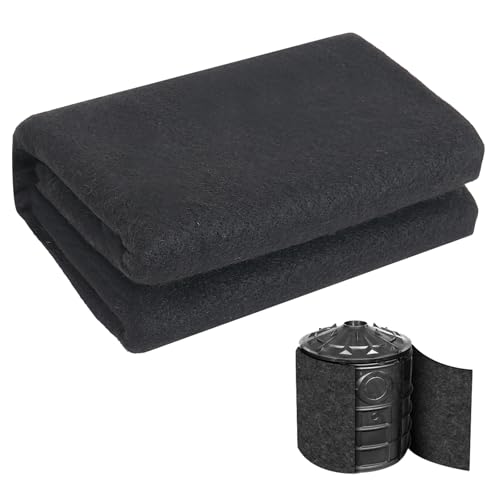
This non-woven fabric provides effective silt prevention and robust drainage performance for stormwater dry wells and French drains. The rugged filter fabric is designed to withstand soil pressures while allowing water and nutrients to move through. It’s a practical option for projects requiring reliable filtration and sub-surface drainage with minimal clogging risk over time.
VOLVEX 3ft x 50ft 4 oz

VOLVEX offers a lighter 4 oz option with 450 N tensile strength and 1500 N load capacity, emphasizing drainage enhancement and high water permeability. It is designed to prevent soil compaction and support a French drain system by maintaining filtration while enabling substantial water flow. The fabric also features good filtration properties to protect drainage infrastructure and soil below.
Buying Guide: Key Purchase Considerations For Drainage Geotextile Fabric
Permeability and filtration: Look for fabrics that balance water passage with soil particle retention. Higher permeability reduces pooling while preventing sediment clogging in drains.
Strength and load capacity: For driveways, walkways, and heavy-use areas, choose fabrics with strong tensile ratings (around 350N or higher) and substantial load capacity to resist tearing and compression.
Soil compatibility: Consider soil type and moisture. In silty or clay soils, filtration and separation properties become more critical to prevent clogging and maintain drainage efficiency.
Durability and longevity: Non-woven fabrics tend to handle tears better and provide durable erosion control. Woven fabrics may excel in heavy-load scenarios but can be less forgiving with soil movement.
Installation ease: Panels or rolls should be easy to cut and cover irregular shapes. A fabric that is easy to handle reduces installation time and reduces waste.
Application focus: Different applications emphasize different features—French drains prioritize filtration and permeability, while driveways emphasize load-bearing capacity and erosion resistance. Align fabric choice with project goals.
Environmental impact: Opt for materials that resist degradation and minimize the need for frequent replacement. Look for fabrics designed for long-term outdoor use in typical American climates.