Choosing the right drip irrigation line for trees involves balancing emitter spacing, length, durability, and compatibility with existing fittings. The following selections represent versatile, field-tested options that deliver targeted watering to root zones while minimizing waste. This guide outlines five top drip lines and highlights how their features support healthy tree growth across landscapes, gardens, and urban spaces.
Summary of Selected Products
| Product | Brand | Length | Emitter Spacing | Notes |
|---|---|---|---|---|
| (100′ ft Roll) – 1/4-Inch x Irrigation/Hydroponics Dripline with 6-Inch Emitter Spacing (Brown) | One Stop Outdoor | 100 ft | 6 inches | Durable, chemical-resistant, easy ¼” fittings |
| MIXC 1/4″ Irrigation Dripline Tubing (100 Ft Roll) with 6″ Emitter Spacing | MIXC | 100 ft | 6 inches | Built-in emitters; versatile and durable |
| DIG ML-112, ¼” 100′ MICROLINE Dripline -12” Spacing | DIG | 100 ft | 12 inches | UV-protected; compatible with ¼” fittings |
| Habitech 1/4″ Irrigation Dripline Tubing (100 Ft Roll) – 6″ Emitter Spacing | Habitech | 100 ft | 6 inches | Built-in emitters; flexible and durable |
| DIG SH512, ¼” 500’ MICROLINE Dripline – 12” Spacing | DIG | 500 ft | 12 inches | Long run with even distribution; universal fittings |
(100′ ft Roll) – 1/4-Inch x Irrigation/Hydroponics Dripline with 6-Inch Emitter Spacing
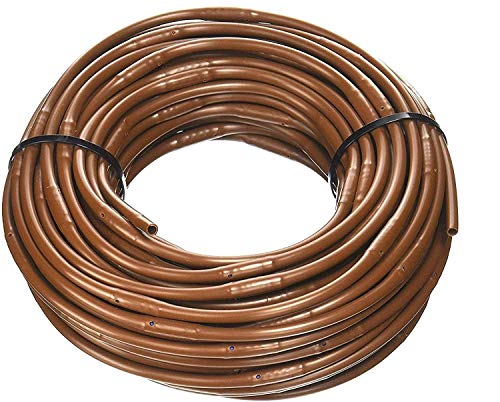
This 100-foot dripline is designed to work with 1/4-inch fittings and features emitters spaced every 6 inches, delivering approximately 0.5 GPH at each emitter. Its length supports multiple tree planting zones within a landscape. The tubing is resistant to common chemicals and fertilizers used in landscaping, making it suitable for garden beds around mature trees. Lightweight and flexible, it attaches quickly to 1/2″ drip tubing with standard 1/4″ barbed fittings for straightforward installs. Ideal for tree edges and around drip circles.
Key benefits include durable construction that resists chemical exposure and fertilizer residues, plus six-inch emitter spacing that targets root zones without overwatering. This product is best for smaller to mid-sized trees or as a starter line in a larger irrigation plan. It’s a practical choice for homeowners who want a reliable, low-maintenance dripline that’s easy to extend as trees mature.
MIXC 1/4″ Dripline With 6″ Spacing (100 Ft)

The MIXC dripline provides 100 feet of 1/4-inch tubing with built-in emitters every 6 inches at a rate of about 0.5 GPH. This eliminates the need for external drippers, simplifying installation around trees and adjacent beds. The compact design supports flexible routing around trunks and root zones, making it suitable for younger trees or trees with shallow root systems. Durability is enhanced for outdoor use, and the tubing can be buried or laid along soil surfaces for subsurface irrigation when desired.
For tree irrigation, the short run length and consistent emitter spacing help minimize water waste and provide even moisture near the root zone. The built-in emitters reduce the number of components to manage, lowering maintenance. It’s well-suited for home landscapes where quick setup and straightforward expansion are priorities.
DIG ML-106 Dripline (100′, ¼” MICROLINE, 6” Spacing)
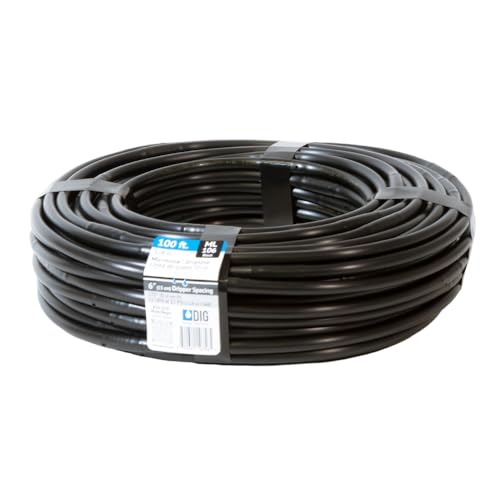
The DIG ML-106 dripline offers 100 feet of ¼-inch tubing with 6-inch emitter spacing, delivering 0.52 to 0.65 GPH per emitter within an operating pressure range of 15 to 25 PSI. It’s designed to promote uniform root zone watering for trees and shrubs. Note the recommended single-run length is up to 16 feet for consistent performance; longer runs can reduce flow uniformity, especially when elevated lengths are required to reach distant root zones. The line accepts standard ¼-inch barb fittings, ensuring compatibility with most irrigation components.
For tree applications, this option balances ease of installation with reliable emitter performance. It’s especially suited for installations where trunk protection and near-base moisture are critical, such as in landscaped tree rings or protective mulch beds around trees. Limitations include potential pressure-driven variability on longer paths, so plan routes to keep runs compact when possible.
DIG SH512 ¼” 500’ MICROLINE Dripline – 12” Spacing

The SH512 version provides 500 feet of ¼-inch tubing with 12-inch emitter spacing, offering lower emitter density suitable for larger tree landscapes or orchard-like settings. Emitters deliver about 0.52 to 0.65 GPH within a 10–25 PSI operating range, enabling deeper root zone saturation. The design emphasizes durability with UV-resistant tubing and easy installation, compatible with other ¼-inch fittings. For long runs, monitor pressure and potential flow losses to maintain even watering at distant emitters.
This option is strong for larger trees, groves, or landscapes where long, continuous lines are necessary. It supports subsurface or surface installation and pairs with a broad range of fittings, making it adaptable to existing irrigation networks. Careful layout planning helps prevent uneven distribution across the entire length of the line.
Bonviee 200ft 1/4 Inch Drip Irrigation Tubing

The Bonviee 200-foot drip irrigation tubing focuses on flexibility and durability with a 1/4-inch main line that can branch from 1/2-inch tubing. Its design prioritizes easy installation around trees, beds, and mixed plantings, with good weather resistance for year-round use. It’s well-suited for both subsurface and surface applications, providing a reliable backbone to support various tree irrigation layouts. The tubing’s weather tolerance means fewer replacements after seasonal changes, contributing to long-term system stability.
Habitech 1/4″ Dripline Tubing (100 Ft Roll) – 6″ Spacing

Habitech’s product combines tubing and inline emitters in one unit, featuring 6-inch emitter spacing at 0.5 GPH per emitter. The integrated design simplifies installation around trees, rows, and beds, reducing the number of separate components. It offers notable flexibility to extend a system by adding fittings as needed, and its durable construction stands up to outdoor conditions. The tubing’s ability to be buried for subsurface use is a plus for tree irrigation where surface disruption should be minimized.
Buying Guide: Key Purchase Considerations for Tree Irrigation
- Emitter spacing: Closer spacing (e.g., 6 inches) benefits young trees or compact root zones, while wider spacing (e.g., 12 inches) suits larger trees and longer root zones. Match spacing to root architectures and canopy size.
- Flow rate and pressure: Most emitters range from 0.5 GPH to 0.65 GPH at 15–25 PSI. Plan for your water source’s pressure and consider the impact on longer runs where pressure drops occur.
- Run length and layout: Shorter runs maintain uniform distribution; longer runs may require pressure boosting or modular segments. Avoid very long single runs from one supply to maximize uniformity across emitters.
- Durability and materials: UV resistance, chemical resistance, and temperature tolerance extend system life in outdoor tree environments. Buried tubing offers subsurface irrigation options with reduced evaporation.
- Fitting compatibility: Ensure compatibility with your existing ¼” fittings and consider universal compatibility for future expansion or component swaps.
- Installation ease: Tubing with built-in emitters or integrated components reduces assembly steps, which is helpful for large trees or landscapes with multiple zones.
- Maintenance and accessibility: Choose lines that minimize clogs and are easy to inspect. A modular design helps you replace a section without disturbing the entire system.
- Environmental considerations: Target root zones and avoid watering sidewalks, driveways, or stormwater areas to conserve water and protect soil health.
These selections provide a range of options—from compact 100-foot rolls suitable for trees in medium-sized landscapes to longer runs for larger properties. When planning, sketch a layout that prioritizes root zones, trunk protection, and ease of future expansion. Consider combining multiple lines to serve different tree sizes and grafting scales, ensuring efficient water usage and healthy tree growth over time.