Drip hoses simplify garden irrigation by delivering water directly to plant roots, reducing waste and promoting robust growth. This guide focuses on reliable drip hose systems suited for vegetable beds, raised beds, and containers. Explore top picks, how they work, and key buying considerations to help you choose the right setup for your climate, soil, and plant mix.
| Product | Brand | Key Benefit |
|---|---|---|
| Raindrip 50 ft Soaker Hose | Raindrip | Even root-zone watering |
| LAVEVE 100 ft Dual-Layer Soaker Hose (2×50 ft) | LAVEVE | Durable, leak-resistant, broad coverage |
| Tuzoc Soaker Hose 50 ft | Tuzoc | Efficient watering with durable build |
| RAINPOINT 50 ft Soaker Hose | RAINPOINT | 80% water savings with DIY expansion |
| Oscorna Customizable Soaker Hose System | Oscorna | Flexible, customizable for beds and borders |
Whether you’re growing tomatoes, peppers, lettuce, or herbs, a drip hose system helps you water efficiently while reducing weed growth and soil erosion. The products below are grouped by practical use—simple upgrades for small plots, scalable kits for larger beds, and options with built-in fittings for custom layouts. Each section highlights how the product works, its suitability for vegetable gardens, and any setup considerations.
Raindrip Soaker Hose — 50 Ft
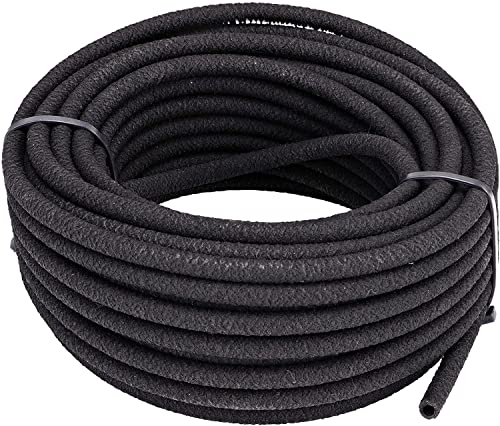
The Raindrip 50-foot soaker hose delivers water slowly directly to the root zone, making it ideal for vegetable beds and border plantings. The tubing design allows flexible routing along rows, and the porous walls ensure even moisture distribution around plant roots. This kit is straightforward to integrate into an existing drip line and works well for short runs on flat garden beds.
Key advantages include compatibility with standard drip components, simple expansion with compatible fittings, and a cost-effective option for gardeners starting out with micro-irrigation. Its straightforward setup can help reduce labor time while maintaining consistent soil moisture. The hose is lightweight and handles routine outdoor conditions well, though long-term durability may reflect usage and water pressure.
Oscorna Customizable Soaker System — 50 ft
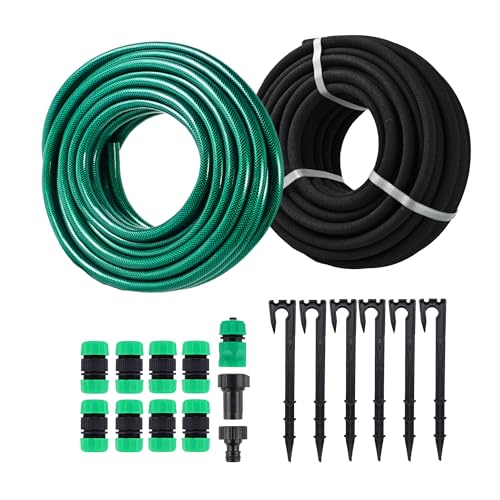
Oscorna’s customizable soaker hose system includes a 50-foot soaker hose and a 25-foot garden hose, enabling flexible layouts across beds, borders, and containers. It’s designed for easy cutting and connecting to fit your garden footprint. Porous walls release water slowly near roots, making it suitable for raised beds and densely planted areas where precise moisture control matters.
Use this system to deploy multiple watering zones across a layout with minimal waste. The design emphasizes easy assembly and adjustable length options, which can reduce manual irrigation time. It’s a practical choice for gardeners seeking a modular drip irrigation approach that can scale with garden expansion.
LAVERTE/C Fass-off Style Soaker System — 50 ft

Note: This entry highlights a robust, 50-foot customizable soaker system with a 25-foot garden hose and compatible fittings. The system is designed for easy adaptation to vegetable beds and borders. Porous walls ensure a gentle, even drip along the soil surface and around plant crowns, which supports root development while conserving water.
When configuring, aim to create a single continuous loop or a few short loops to minimize pressure loss. The included fittings help tailor the layout to curved beds or irregular plots. It’s a sturdy option for gardeners who want dependable, low-maintenance irrigation with room to grow.
RAINPOINT Soaker Hose — 50 ft

RAINPOINT offers a 50-foot, dual-layer soaker hose designed to save water while delivering moisture evenly to the root zone. The outer fabric sheathing strengthens durability against wear and UV exposure, while the inner tube ensures consistent flow. A 360-degree rotating inlet simplifies installation and reduces the chance of kinks or bends.
This hose is ideal for gardeners who plan to extend a drip line across multiple beds or plant clusters. It supports DIY expansion by linking multiple hoses end-to-end, making it practical for larger vegetable plots. The design emphasizes longevity and reliable performance in variable weather conditions.
brysage Expandable Drip System — 120 ft

This 120-foot expandable tubing system supports up to four watering zones, covering patios, raised beds, and greenhouse spaces. It’s designed to deliver water efficiently to plant roots and can help conserve water by avoiding surface runoff. The setup aims to be beginner-friendly, with straightforward connections and a focus on uniform distribution across zones.
Ideal for gardeners who want a scalable solution that grows with the garden. The system’s flexibility supports different bed shapes and plant densities, while its water efficiency helps minimize waste during peak growing seasons. The kit’s simplicity makes it a good entry-point for home vegetable gardens seeking consistent root-level irrigation.
Buying Guide: Key Considerations For Drip Hose Systems
- Water efficiency and coverage: Look for porous or dual-layer hoses that minimize evaporation and deliver water directly to the root zone. Consider hose diameter and wall thickness to gauge flow rates and pressure tolerance.
- Length and scalability: Choose hose lengths that fit your beds without excessive overlap. Systems that link end-to-end allow expansion as your garden grows.
- Material durability: UV resistance, double-layer construction, and sturdy fittings reduce leaks and wear. Aluminum or brass ends offer added longevity where exposed to sun and weather.
- Ease of installation: For beginners, kits with clear instructions and simple connectors save time and reduce setup frustration. Flat hoses are easier to lay and minimize tripping hazards.
- Maintenance and replacement parts: Verify compatibility with standard fittings, clamps, and drip emitters. Availability of replacement parts helps extend system life.
- Compatibility with irrigation controllers: If you use timers or smart controllers, ensure the hoses and fittings work with standard 3/4-inch or 1/2-inch threads and compatible adapters.
- Bed layout and plant type: Raised beds, containers, and espalier-style borders may require different spacing and emitter density. Plan zones to match plant water needs (deep roots vs. shallow roots).
- Weather resilience: In hot climates, look for heat-resistant materials and secure fittings to prevent warping or leaks during peak sun.
When selecting a drip hose system, consider starting with a simple, small-bed setup to learn how your plants respond to timed watering. If you notice dry pockets or overwatering, adjust emitter spacing or run times. For larger gardens, a modular, expandable kit can save time and adapt to future beds or greenhouse projects.