Farmers depend on precise weather data to make informed decisions that protect crops and optimize yields. Weather stations designed for agricultural use offer vital insights such as temperature, humidity, wind speed, rainfall, and more. This article reviews top weather stations suited for farming needs, highlighting features like wireless sensors, advanced forecasting, and data accessibility.
| Weather Station | Brand | Key Features |
|---|---|---|
| AcuRite Iris (5-in-1) Professional Weather Station | AcuRite | Lightning detection, 50+ weather metrics, wind speed/direction, barometric pressure |
| Newentor Wireless Indoor Outdoor Thermometer | Newentor | Color LCD, atomic clock, 3 remote sensors, weather forecast, adjustable backlight |
| La Crosse Technology 328-96087-INT Professional Weather Station | La Crosse Technology | Accurate wind gauge, rainfall tracking, atomic time, high/low records, alerts |
| Ambient Weather WS-2902 WiFi Smart Weather Station | Ambient Weather | Wi-Fi enabled, hyper-local data, smart home integration, solar & UV sensors |
| AcuRite Iris (5-in-1) Indoor/Outdoor Wireless Weather Station | AcuRite | 55+ data points, easy setup, real-time temperature, humidity, wind, rainfall |
AcuRite Iris (5-in-1) Professional Weather Station with Lightning Detection
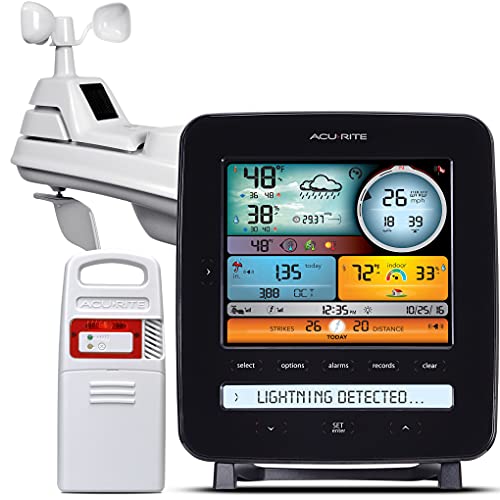
The AcuRite Iris 5-in-1 Weather Station provides real-time monitoring of indoor and outdoor temperature, humidity, wind speed and direction, barometric pressure, and rainfall. It also features lightning detection, estimating the distance of lightning-producing storms and totaling strike counts weekly and monthly. Ideal for farmers who must track storms and precipitation precisely, it delivers over 50 weather metrics including pressure trends, heat index, dew point, and rainfall history. The large LCD display allows quick data access to make effective agricultural decisions.
Newentor Wireless Indoor Outdoor Thermometer With Color Display

The Newentor Weather Station is tailored for convenience with a 7.5-inch vibrant LCD screen displaying inside and outside temperature, humidity, and a customizable alert system. It supports up to three wireless sensors to monitor multiple locations on a farm, making it valuable for tracking different field zones. An atomic clock with alarm, moon phases, and a 12-24 hour calibrated weather forecast are included, making it a versatile tool for daily agricultural weather planning.
La Crosse Technology 328-96087-INT Professional Weather Station

This professional-grade weather station from La Crosse Technology features an advanced wind gauge capable of measuring speeds up to 111 mph, ideal for farms in tornado or storm-prone areas. It provides indoor/outdoor temperature and humidity, rainfall data with customizable alerts, and atomic time/date synchronization. The comprehensive rainfall tracking reports accumulated precipitation over various time frames, offering essential data for irrigation and crop health management.
Ambient Weather WS-2902 WiFi Smart Weather Station
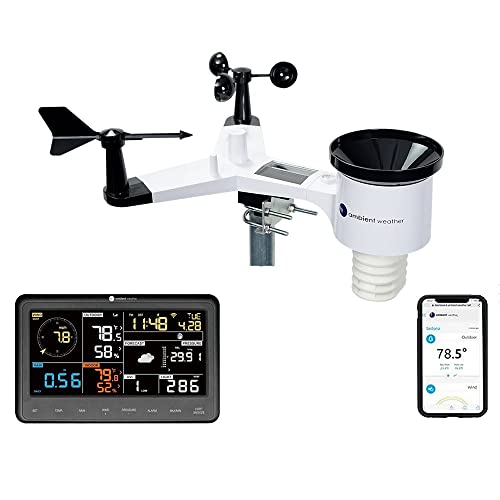
The Ambient Weather WS-2902 delivers hyper-local weather data via Wi-Fi, covering wind speed and direction, temperature, humidity, rainfall, UV intensity, and solar radiation through its Osprey sensor array. Its smart home compatibility with Alexa, Google Home, and IFTTT allows farmers to automate alerts and actions based on weather conditions, providing a modern approach to farm weather monitoring and automation.
AcuRite Iris (5-in-1) Indoor/Outdoor Wireless Weather Station
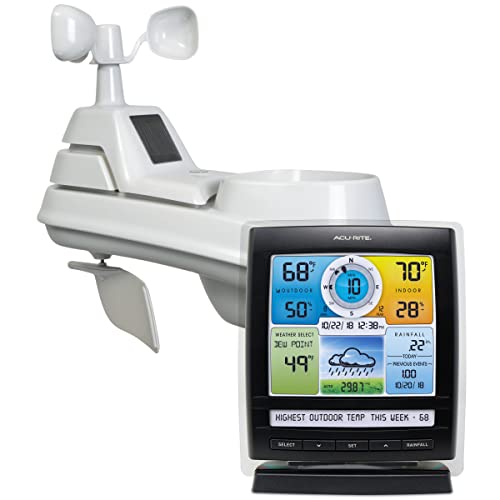
The AcuRite Iris 5-in-1 Indoor/Outdoor Weather Station offers extensive weather data with more than 55 data points such as indoor and outdoor temperature, humidity, wind speed, direction, rainfall, barometric pressure, heat index, and dew point. Its simple setup with wireless sensors makes it practical for farms needing reliable, continuous weather monitoring to optimize planting, irrigation, and harvesting schedules.
Buying Guide for Weather Stations Suitable for Farmers
Choosing the right weather station for farming involves several key factors:
- Weather Data Coverage: Select a station that tracks all critical parameters like temperature, humidity, wind speed/direction, rainfall, and barometric pressure. Lightning detection can be crucial in some regions.
- Sensor Range and Wireless Capability: Consider the distance between sensors and the console. Farms benefit from stations with wide wireless ranges (300+ feet) to cover large fields effectively without signal loss.
- Data Accuracy and Update Frequency: For timely decisions, stations should provide precise, real-time readings with frequent updates. Professional-grade sensors improve reliability.
- Forecasting and Alerts: Integrated short and medium-range forecasts, along with customizable alerts for weather events, help farmers respond proactively to changing conditions.
- Display and Accessibility: Large, easy-to-read displays or smartphone compatibility ensures data is accessible at a glance or remotely, facilitating monitoring while working outdoors.
- Smart Home Integration: Stations compatible with smart assistants like Alexa or Google Home offer automation options, such as activating irrigation systems based on rainfall or humidity levels.
- Durability and Weather Resistance: Sensors installed outdoors must withstand harsh weather, UV exposure, and temperature fluctuations for sustained performance.
- Ease of Installation and Maintenance: Wireless, battery-powered units with simple mounting options save time and reduce upkeep, which is valuable for busy farmers.
By assessing these aspects, farmers can select a weather station tailored to their operational scale and specific climatic challenges. Comprehensive units provide actionable weather insights critical for crop management, enhancing productivity, and mitigating risks caused by adverse weather.