Maintaining healthy food plots is essential for supporting thriving deer populations. Using herbicides formulated specifically for food plots helps control unwanted weeds and grasses without harming desirable forage like clover and alfalfa. Below is a summary table of highly regarded herbicides tailored for food plot applications, followed by detailed product reviews and a buying guide for choosing the right herbicide for your needs.
| Product | Brand | Primary Use | Features |
|---|---|---|---|
| Whitetail Institute Arrest Max Selective Grass Control Herbicide | Whitetail Institute | Grass control in deer food plots | Controls broad range of grasses; safe for clover and alfalfa |
| Whitetail Institute Slay Selective Broad-Leaf Weed Control Herbicide | Whitetail Institute | Broadleaf weed control in food plots | Targets broadleaf weeds; spray in spring/early summer |
| AgriStar Clethodim 2E Herbicide | vipstar | Grass control | Biological control for fungus; effective grass herbicide |
| Butyrac 200 Herbicide | Albaugh | Broadleaf weed control in alfalfa | Effective on broadleaf weeds within alfalfa crops |
| Nufarm Change Up Premium Selective Herbicide | Nufarm | Turf and food plot broadleaf weed control | Controls over 200 broadleaf weeds; safe on many grasses |
Whitetail Institute Arrest Max Selective Grass Control Herbicide
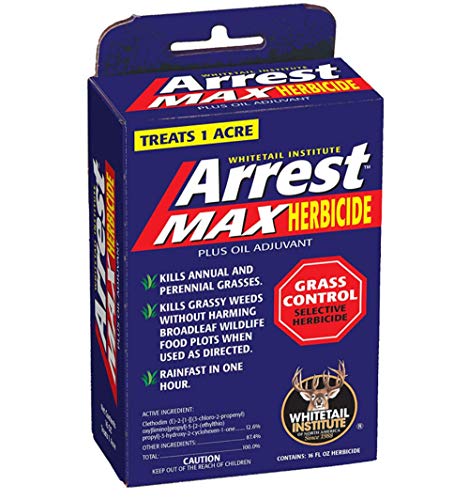
This herbicide is specifically developed for food plots and is highly effective at controlling a broad range of annual and perennial grasses that can compete with desirable forage crops. It is safe for use with Whitetail Institute perennial forages as well as other clover and alfalfa plantings, ensuring that your prime deer forage is not harmed during treatment. The selective formula helps maintain a balanced plant community, which is crucial for attracting and sustaining deer over time.
Whitetail Institute Slay Selective Broad-Leaf Weed Control Herbicide
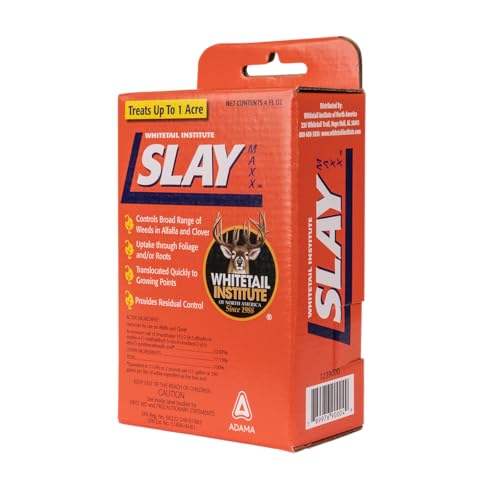
Designed to tackle broadleaf weeds in deer food plots, this herbicide should be sprayed in the spring or early summer when weeds are just emerging. It fits well with common agricultural equipment, suitable for application via four-wheelers or tractor sprayers. Applying it at the right growth stage ensures maximum effectiveness without harming beneficial plants. Its selective broadleaf weed control supports healthier food plots and better forage availability for wildlife.
AgriStar Clethodim 2E Herbicide

This herbicide focuses on selective grass control and features biological control properties for fungus. It is versatile across multiple applications and helps reduce grass competition in food plots, enabling clover and other forages to establish more successfully. Its 2E formulation allows for easier mixing and application, making it a practical option for larger plots or commercial use.
Butyrac 200 Herbicide – Broadleaf Weed Control in Alfalfa

Butyrac 200 is effective on a range of broadleaf weeds commonly found in alfalfa, a staple forage in many food plots. Its targeted control helps maintain plant health and productivity by eliminating competitor weeds, which supports better growth conditions for deer-attractive plants. The product is favored for its reliability in alfalfa plots but can benefit any similar forage setup.
Nufarm Change Up Premium Selective Herbicide

This premium selective herbicide provides excellent control of over 200 broadleaf weed species including dandelion, plantain, oxalis, and thistles, known for being difficult to manage. It features broad turfgrass tolerance, safe to apply on both cool- and warm-season grasses often found within food plots. Its use extends to residential and commercial lawns, but it also suits specialized food plots where weed control must be precise and safe for desirable plants.
Buying Guide for Choosing the Best Herbicide for Food Plots
Target Weeds and Plant Compatibility
Identify the type of weeds predominant in your food plots—whether grasses or broadleaf species. Selective herbicides targeting these specific weed groups are essential to avoid damaging desirable forage plants like clover and alfalfa. For example, products like Whitetail Institute Arrest Max focus on grasses, while Whitetail Institute Slay targets broadleaf weeds.
Timing and Application Method
Optimal application times vary by herbicide type and weed growth stage. Spring or early summer usually works best for broadleaf control, while grass herbicides may have different schedules. Consider your available equipment—many herbicides can be applied with standard sprayers mounted on four-wheelers or tractors.
Safety and Environmental Impact
Choose herbicides safe for wildlife and beneficial plants to maintain ecological balance. Herbicides that are specifically formulated for food plots tend to minimize adverse impacts. Always follow label instructions regarding safe handling, application rates, and restrictions.
Plot Size and Herbicide Volume
Match the herbicide quantity to your plot size to ensure adequate coverage without waste. Concentrated formulations like the AgriStar Clethodim 2E in gallon sizes support larger areas, while smaller containers suit limited or trial plots.
Broad Spectrum vs. Selective Control
Decide if you need a broad-spectrum herbicide that controls multiple weed types simultaneously or selective products that target specific weeds. Broad-spectrum solutions can reduce the need for multiple applications, but selective formulations help protect valuable forage species from damage.
Long-Term Forage Health
Consider herbicides that promote long-term plot vitality by controlling persistent perennial weeds without harming beneficial plants. Maintaining healthy forage ensures ongoing deer attraction and nutritional quality.