Growing vegetables in raised garden beds requires soil enriched with the right nutrients to ensure healthy plant development and bountiful harvests. Choosing the best fertilizer for raised vegetable gardens means considering factors like nutrient content, organic ingredients, and longevity of feeding. Below is a summary of top-rated fertilizers tailored for raised beds that nourish fruits, vegetables, herbs, and flowers efficiently.
| Fertilizer | Brand | Type | Weight | Organic |
|---|---|---|---|---|
| Miracle-Gro Raised Bed Plant Food | Miracle-Gro | Granules | 2 lbs | No |
| Miracle-Gro Performance Organics Raised Bed Plant Nutrition | Miracle-Gro | Organic Granules | 2.5 lbs | Yes |
| True Organic Raised Bed Food | True Organic | Organic Granules | 4 lbs | Yes |
| Miracle-Gro Shake ‘n Feed Tomato, Fruit and Vegetable Plant Food | Miracle-Gro | Granules | 4.5 lbs | No |
| Jobe’s Organics Granular Garden Fertilizer | Jobe’s Organics | Organic Granules | 4 lbs | Yes |
Miracle-Gro Raised Bed Plant Food, 2-Pound

Miracle-Gro Raised Bed Plant Food is specifically formulated to feed raised garden beds for up to 3 months. It supports the growth of fruits, flowers, vegetables, and herbs, providing essential nutrients that improve yield and plant health. For even better results, it pairs well with Miracle-Gro Raised Bed Soil, offering enhanced nourishment compared to unfed plants. Its long-lasting feeding formula makes it convenient for gardeners aiming for sustained growth without frequent reapplication.
Miracle-Gro Performance Organics Raised Bed Plant Nutrition Granules
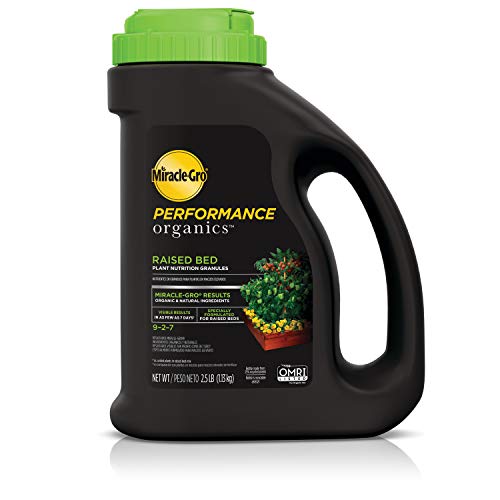
This organic and natural plant food is made for vegetables, fruits, herbs, and flowers grown specifically in raised beds. Miracle-Gro Performance Organics uses nourishing granules that begin delivering visible results in as few as 7 days. This product is OMRI listed and focuses on enriching soil naturally while promoting robust plant development. It’s ideal for gardeners seeking organic certification and natural gardening methods.
True Organic Raised Bed Food – Organic Fertilizer for Vegetables & Herbs

True Organic Raised Bed Food is tailored to nourish herbs, flowers, vegetables, and fruits in raised beds and large containers. It features a rich blend of natural ingredients like seabird guano, shrimp and crab shell meal, which provide essential nutrients to enrich soil health and promote abundant growth. Its easy-to-use formula requires application every two months during the growing season, supporting consistent nourishment and healthy plants.
Miracle-Gro Shake ‘n Feed Tomato, Fruit and Vegetable Plant Food

This plant food is known for feeding outdoor potted or in-ground vegetables and fruits for up to 3 months. It contains calcium to strengthen plant cell walls, enhancing the quality and longevity of tomatoes and other produce. The formula includes natural ingredients such as kelp, earthworm castings, feather meal, and bone meal that feed soil microbes, promoting stronger roots and improved water efficiency. It suits gardeners looking for a balanced, feed-once solution.
Jobe’s Organics Granular Garden Fertilizer for Vegetables and Tomatoes

Jobe’s Organics Granular Fertilizer comes in a 4-pound bag formulated with a 2-5-3 NPK ratio, ideal for vegetables and tomato plants. It is designed to minimize wasteful runoff, odors, and mess, making it a user-friendly, organic option that complies with USDA organic gardening standards. Its nutrient mix supports high yields and vibrant foliage, perfect for gardeners focused on sustainable and organic produce cultivation.
Buying Guide: Choosing the Best Fertilizer for Raised Vegetable Gardens
Selecting the right fertilizer for a raised vegetable garden requires attention to several key factors to optimize plant growth and soil health:
- Nutrient Content: Balanced levels of nitrogen (N), phosphorus (P), and potassium (K) are crucial. N supports leafy growth, P encourages root and flower development, and K strengthens overall plant health.
- Organic vs. Synthetic: Organic fertilizers come from natural sources and improve soil structure and microbial activity, while synthetic fertilizers provide immediate nutrient availability. Choose according to your gardening preferences and soil needs.
- Application Duration: Consider how long the fertilizer feeds plants. Slow-release granules reduce the need for frequent applications and maintain consistent nutrient supply.
- Soil Compatibility: Raised beds often use custom soil mixes. Fertilizers that complement the existing soil type, such as those formulated specifically for raised beds, can enhance nutrient uptake.
- Plant Variety: Some fertilizers are tailored for specific crops like tomatoes or vegetables; others are all-purpose. Pick one aligned with the types of plants in your raised garden.
- Environmental Impact: Use fertilizers that are OMRI listed or USDA organic to ensure safety for beneficial insects, pollinators, pets, and nearby ecosystems.
Balancing these aspects will help you find a fertilizer that promotes lush growth, improves soil health, and supports a thriving raised vegetable garden.